
Keyboard Obby: ASMR Speed Run
HIGAME GLOBALCasual
4.616.00 Reviews
- Version
- 1.0
- Installs
- 1.00M
- Age Rating
- Everyone
Screenshots
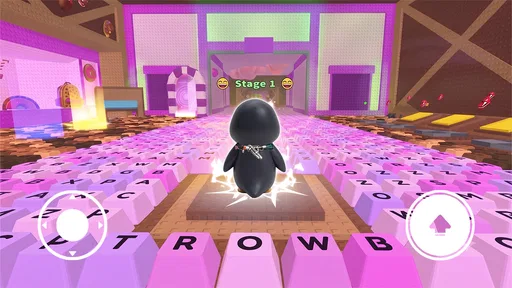
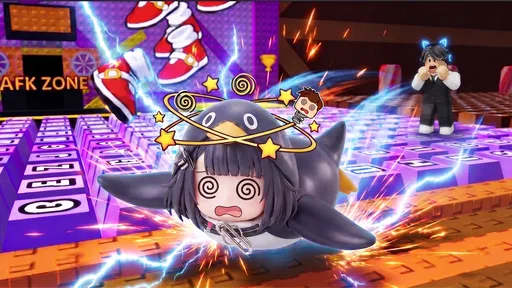
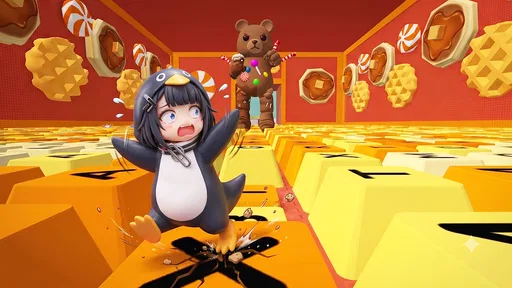
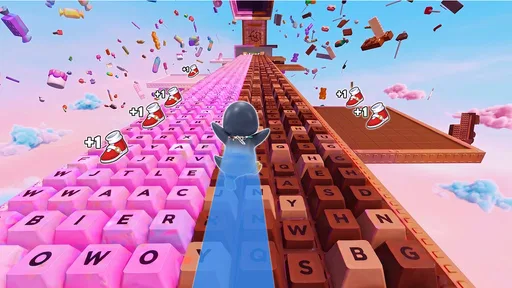
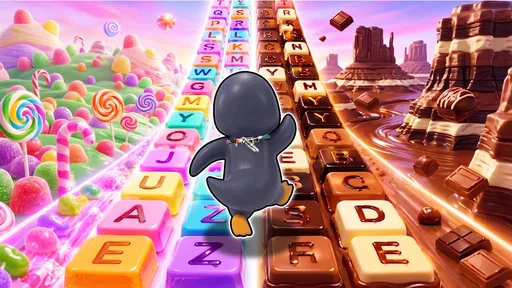
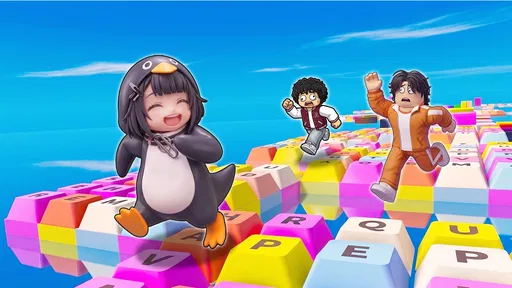
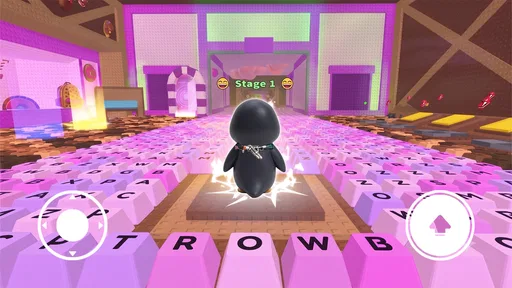
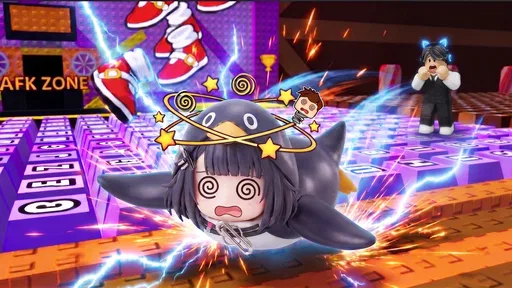
Our Review of Keyboard Obby: ASMR Speed Run
 Analysis by Appyee
Keyboard Obby: ASMR Speed Run is a casual game from HIGAME GLOBAL that turns a simple keyboard-themed obstacle course into a quick test of timing, movement, and patience. I found its appeal easy to understand: each run asks me to move, jump, and escape through a sweet-looking parkour setting while the sound design gives the action a softer, more satisfying feel. It is not trying to be a deep adventure or a competitive multiplayer experience. Its strength is the short, focused challenge.
The game is free to download and carries an Everyone age rating, which makes it approachable for a broad audience. It has reached over a million installs and holds a 4.6 average from around two thousand ratings, so there is already a sizeable audience interested in this particular style of casual obstacle game. I would describe it as a good choice for people who enjoy compact levels, repeated attempts, and the small satisfaction of improving a route one mistake at a time.
How the keyboard parkour idea works in practice
The central idea is deliberately straightforward. I guide a character through a sugary obstacle course, using movement and jumps to get past hazards and reach safety. The keyboard theme gives the setting its identity instead of leaving the game as just another generic running challenge. Platforms and obstacles feel connected to the idea of keys and typing, while the sweet visual style keeps the presentation light rather than tense.
That simplicity is important because the game is easiest to enjoy in short sessions. I can pick it up when I have a few spare minutes, make several attempts, and stop without feeling that I have abandoned a complicated story or a long mission. The format also makes it suitable for casual players who prefer an immediate objective instead of a large menu of systems to learn.
The ASMR angle is part of the experience rather than a separate feature that changes the genre. Sound helps give movement and successful actions a more tactile character. When a game is built around repeated jumps and careful positioning, audio feedback can make otherwise basic actions feel more deliberate. I would not install this expecting a full relaxation app, but the softer sound-focused presentation does help distinguish it from louder, more frantic runners.
One useful way to approach the game is to treat every failed attempt as route practice. Rather than rushing immediately after a mistake, I pay attention to the exact point where my timing went wrong. Was I jumping too early, landing too close to an edge, or moving before the next platform was properly lined up? That mindset makes the repeated runs feel more purposeful and reduces the frustration that can come from seeing the same obstacle several times.
The control challenge is more about rhythm than speed
The store summary emphasizes running, jumping, and escaping, but the practical challenge is not simply holding a direction and hoping for the best. The useful skill is building a rhythm between movement and jumps. I get better results when I separate those actions mentally: first line up the approach, then commit to the jump, and only afterward prepare for the next landing.
This matters especially for players who usually rely on fast reactions. Speed can help, but rushing every section makes small positioning errors more likely. A slower first attempt can reveal the shape of a route, after which later attempts become faster naturally. That makes the game more satisfying for players who enjoy learning patterns, even if it may feel too repetitive for someone who wants constant novelty.
For touch-screen play, I would recommend keeping my fingers relaxed and avoiding large, panicked swipes or taps. Precision matters more than force. If the device is being held in an awkward position, even a simple jump can feel harder than it should, so playing with both hands and keeping the screen unobstructed is a practical improvement. These are small habits, but they make a noticeable difference in a game where a minor input mistake can send a run back to the beginning.
What the presentation adds beyond the basic obstacle course
The sweet parkour setting gives the game a friendlier personality than a plain platforming course. That visual choice is useful for younger players and for adults who prefer casual games without dark themes or heavy drama. The Everyone rating supports that broad positioning, although parents should still make their own decision based on the child’s tolerance for repeated failure and fast movement.
The keyboard concept also gives me a simple mental map for the levels. Instead of seeing disconnected blocks, I can think of the course as a sequence of keys or keyboard-like spaces. That helps with memorizing routes: I focus on the order of movements and the spacing between landing points, not just on the overall appearance of the stage.
At the same time, the theme should not be mistaken for a typing tutor. The game uses the keyboard idea as a visual and gameplay identity, but I would not choose it to improve typing speed or accuracy. Someone looking for educational keyboard practice would be better served by a dedicated learning tool. Here, the reward comes from completing the parkour route, not from producing text.
Value, limitations, and the right kind of player
I find the value of this free game depends less on how long I play and more on whether I enjoy refining a short route. Its narrow focus is a real limitation, but it also makes it easy to fit into spare moments without a costly commitment. I’d use the next section to weigh that trade-off against the kind of player who will get the most from it.
What free access means here
Because the game is free, the basic decision is uncomplicated: I can try it without paying for access. That gives it a clear advantage over a paid casual game that asks me to commit before I know whether its movement feels comfortable. The free entry point is especially useful for families, occasional players, and anyone who wants a small game to test during a break.
Free does not automatically mean unlimited value, though. The real question is whether the obstacle-course format stays enjoyable after the first novelty fades. If I like repeating routes, refining timing, and chasing a cleaner run, the no-cost entry can provide worthwhile entertainment. If I need a changing story, deep character development, or a large variety of activities, the same free access may not be enough to keep me interested.
I also prefer to judge the game by what it actually gives me rather than by assuming that free means generous in every respect. The confirmed price is free, while details such as optional purchases or advertising arrangements are not part of the information available here. I would therefore install it for the gameplay itself, not because I expect a particular monetization model or a guaranteed absence of interruptions.
That distinction is important when recommending it to a friend. I can confidently say that there is no purchase price required to start playing. I would not promise a completely uninterrupted session or describe it as a premium experience without additional evidence. For a casual game, that is a fair and practical way to set expectations.
Where the game delivers genuine value
The strongest value comes from its focused loop. I get a clear goal, a compact physical challenge, and an audio-visual style that makes the attempt feel more engaging than a bare-bones platform test. The game is easy to understand quickly, but it still leaves room for improvement because better timing can turn a failed route into a successful one.
It also works well as a reset between demanding tasks. Imagine waiting for a bus or taking a short break after studying. I could play a few attempts, concentrate on one difficult sequence, and put the phone away without needing to remember a complex plot. That kind of low-commitment session is where the game makes the most sense.
Another less obvious strength is that it can encourage controlled experimentation. Instead of treating every level as something to rush through, I can deliberately test different approaches: take a wider line, delay a jump, or use a landing as a setup for the next movement. This turns a simple casual game into a small exercise in observation and correction. It is not a sophisticated training system, but it rewards a more thoughtful style of play than the bright presentation might suggest.
The current version is 1.0, and that helps explain why I approach it as a focused starting experience rather than a mature platform with a long history of refinement. The game can still be enjoyable in that form, but players who expect a large amount of content or years of accumulated features should keep their expectations measured.
Tradeoffs that may affect enjoyment
The same simplicity that makes the game accessible can also make it feel narrow. There is no reason to choose it over a more elaborate platformer if what I want is exploration, character progression, or a strong narrative. Its appeal depends on whether the act of repeating and improving obstacle runs is enough on its own.
Precision-based casual games can also produce a particular kind of frustration. A player may understand exactly what to do but still miss because the timing was slightly off. I see that as part of the genre rather than a flaw by itself, but it means the game is not equally relaxing for everyone. The ASMR-inspired sound can soften the mood, yet the repeated failure loop may still feel stressful to players who dislike restarting.
Another tradeoff is the gap between visual friendliness and mechanical demand. The candy-like setting suggests something very easy, but successful parkour still requires attention. Younger children may enjoy the look while needing time to develop the coordination required for accurate jumps. For them, the best use may be short supervised sessions rather than long attempts to force progress.
Players with older devices should also check compatibility before installing. The minimum operating-system requirement is Android 7.0, so the game is not restricted to only the newest Android phones, but compatibility still depends on the device and its software condition. I would keep enough free space and close unrelated apps if performance feels uneven, although I would not assume that every slowdown has the same cause.
Who should install it, and who should skip it
I would recommend Keyboard Obby: ASMR Speed Run to someone who likes casual platform challenges, especially if that person enjoys learning a route through repeated attempts. It is a good fit for players who want an immediate game with a clear objective and a playful keyboard theme. The free price also makes it easy to suggest as a low-risk download for a quick trial.
It is particularly suitable for short breaks. A player does not need to schedule a long session or understand a complicated progression system before having fun. The game can also appeal to people who enjoy sound-focused presentation but still want an active task rather than passive audio.
I would be more cautious about recommending it to someone who wants endless variety. A conventional endless runner may be better for a player who prefers constantly changing scenery and a score-chasing loop. A full platform adventure would be the stronger choice for someone seeking exploration and story. A dedicated ASMR app would make more sense for someone whose main goal is relaxation rather than jumping through hazards.
I would also skip it if my main requirement were competitive online play, advanced customization, or a substantial long-term progression system. Nothing about the game’s confirmed positioning suggests that those are its priorities. Its value is concentrated in the immediate parkour challenge, and that is exactly why some players will enjoy it while others will move on quickly.
My practical verdict
After looking at what it offers, I see Keyboard Obby: ASMR Speed Run as a straightforward, accessible casual game with a memorable theme and a useful free entry point. The combination of keyboard-inspired obstacles, sweet visuals, and sound-centered feedback gives a familiar parkour formula its own character. I like that it can be understood in moments but still rewards patience and route memorization.
My recommendation comes with a clear condition: install it if you enjoy repeating short challenges to improve your timing. Do not install it expecting a large adventure, a typing lesson, or a guaranteed relaxation experience. The game is at its best when I treat each attempt as a small problem to solve rather than as a race that must be won immediately.
HIGAME GLOBAL has aimed this release at the casual end of mobile gaming, and the Everyone rating, free access, and broad Android compatibility make that intention clear. The 4.6 average from around two thousand ratings suggests that the basic formula is connecting with many players, while its 1M-plus installs show that it has found a substantial audience. Those figures are useful signals, but my final decision would still come down to personal taste in obstacle games.
My bottom line: try it if you want a free, bite-sized parkour game with an unusual keyboard theme and ASMR-style presentation. I would keep it installed for quick sessions, especially when I want something more active than a relaxation app but less demanding than a full platform adventure. For players who need depth, variety, or a story, a different option will deliver better value. For everyone else, this is an easy game to test and a pleasant way to turn a few spare minutes into a small timing challenge.
Verdict
Strengths of Keyboard Obby: ASMR Speed Run
- Simple controls make it easy to start playing immediately.
- Short levels are ideal for quick gaming sessions.
- Fast-paced gameplay keeps each attempt engaging.
- Bright visuals make obstacles easy to recognize.
- Playable without requiring advanced gaming skills.
Limitations of Keyboard Obby: ASMR Speed Run
- Repeated obstacle patterns can make the game feel predictable.
- Some levels may become frustrating after repeated failed attempts.
- The experience offers limited variety beyond speed-running challenges.
- Ads may interrupt the flow between attempts.
- Progress can feel less rewarding for experienced players.
Other Releases by HIGAME GLOBAL
View All
BOBA DIY™: Tasty Tea Simulator
Casual4.5

Idol Prank Video Call & Chat
Casual3.8

Monster DIY: Mix Beats
Music4.5

Paint & Hide: Color Guys
Casual3.1
Similar Picks in This Category
View All
My Talking Angela
Outfit7 Limited4.2

My Talking Tom
Outfit7 Limited4.3

Pou
Zakeh4.2

My Talking Tom 2: Pet Game
Outfit7 Limited4.3

Candy Crush Saga
King4.6

Bridge Race
Supersonic Studios LTD4.1
Frequently Asked Questions
What is Keyboard Obby: ASMR Speed Run?
Keyboard Obby: ASMR Speed Run is a fast-paced obstacle-course game centered around keyboard-themed challenges. You guide a character through colorful stages, avoid traps, jump across platforms, and try to reach the finish line as quickly as possible. Its appeal comes from simple controls, short levels, satisfying movement effects, and the relaxing yet energetic ASMR-style sound design.
How do you play Keyboard Obby: ASMR Speed Run?
The gameplay is designed to be easy to understand, even for players who do not usually play obstacle or running games. You generally control the character with taps, swipes, or on-screen movement controls, depending on the challenge. Timing is important because platforms, gaps, moving objects, and hazards can quickly end a run. Repeating difficult sections helps you learn the course.
Is Keyboard Obby: ASMR Speed Run suitable for children?
The game is generally suitable for players who enjoy colorful, non-violent obstacle games, including many children and younger teenagers. It does not focus on combat or frightening content, but parents should still review the age rating, advertising, and in-app purchase information shown on the relevant app store. Younger players may also need help managing screen time and accidental purchases.
Does Keyboard Obby: ASMR Speed Run require an internet connection?
Some parts of Keyboard Obby: ASMR Speed Run may work without a constant internet connection, especially the basic obstacle-course gameplay. However, availability of advertisements, progress synchronization, updates, special events, or optional rewards can depend on online access. Before playing offline, it is best to launch the game while connected and check whether all desired features remain available.
Are there advertisements or in-app purchases in the game?
Like many free-to-download mobile games, Keyboard Obby: ASMR Speed Run may include advertisements and optional in-app purchases. Ads can appear between stages or when you choose bonus rewards, while purchases may offer cosmetic items, advantages, or other extras. Check the store listing and the purchase screen carefully, and use device parental controls if children will be playing.
Play our best games!


